
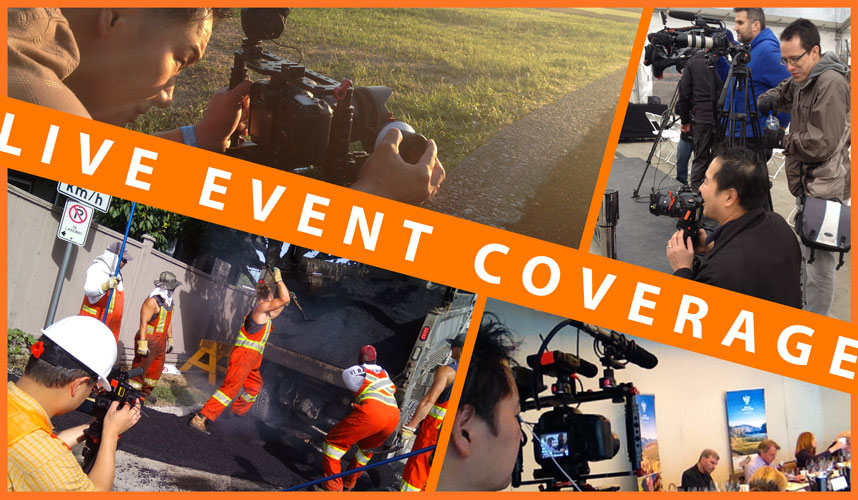
Your event is almost ready to go live! You’ve even accounted for people who can’t make it this time around or don’t know yet that they want to come to the next one. A video will tell them what they’re missing! There are just a few more details to decide. In this series, we discuss the elements and considerations that often go into producing a live event video.
Coverage
How big a team do you need to cover your event? Will one videographer do? Two? A few? Can they operate more than one camera at a time? The answers depend primarily on the size of the event and your priorities for the budget.
A single camera is generally less expensive. You need to pay for only one videographer, possibly an assistant, and one set of equipment. This videographer will be able to cover one thing at a time, from a single angle. If he or she misses something because they were filming something else, or a technical difficulty happened at that particular moment, that moment is missed; there’s nothing you can do about it, and that’s okay.
A single camera can be a good choice for a small, simple event, such as a booth or small conference. Most of the activity is in a small area, or the videographer has ample time to go from one location to another. Your event or budget doesn’t call for specialty shots (like timelapses, slow motion, or crane shots) which can chew up a significant amount of time. One videographer may be able to manage a second, static camera, if your event is a presentation in a small room. Since the final video will be short compared to the length of the event, one videographer will be able to capture enough material for the edit.
If your event is larger or more complex, you may consider hiring more than one videographer. Multiple presentations, speeches, or activities can be captured simultaneously. Often conferences have workshops or presentations in adjacent rooms. Since, a videographer needs time to set up their equipment in each location, multiple operators may be needed to film back-to-back activities.
There are also a number of benefits to having two or more cameras focused on the same activity. Important moments are unlikely to be missed since, if one camera encounters a difficulty, other cameras will still be running. Creative specialty shots can be captured without sacrificing “regular” coverage of the event. More details of the event can be captured. Shots of the audience, people asking questions, close-ups of demonstrations, multiple angles of a stage, all contribute to a more dynamic video edit.
Other matters to consider include synchronizing technology for a consistent “look”, how much and what audio information to capture, and whether your event location will require additional lighting for videography.
Contact us to help you figure out how these aspects factor into your video budget.
See also Timelapses – Read about some ways timelapses are used in live event videos.

